

Septic Drain Field Replacement, Kanoona NSW
The Problem
Holly’s place at Kanoona sits outside the sewer network, so everything the house produces goes through an on-site septic system. The tank does the first part; the drain field does the rest, taking treated sewage, known as ‘effluent’, away, letting it soak into the ground.
Their system had stopped soaking. Effluent was surfacing in one of their paddocks, badly enough that you couldn’t miss it. Once a trench stops absorbing what the tank sends to it, the liquid has nowhere to go but up.
What the Homeowner Noticed
Our local plumbers in Bega got a call from Holly when they noticed two wet patches that wouldn’t dry out. Both were soft and soggy patches that were staying wet long after any rain had gone through, and both patches sat directly above where the line runs for the old disposal field.
Surfacing effluent isn’t something you should wait out. It’s a health risk for anyone walking the paddock, the animals using the paddock, and for properties in the Bega Valley, it’s the homeowner’s responsibility to keep an on-site system in working order.
If you’ve got soggy ground sitting over your septic lines, call our team on 02 6430 7104
What We Checked
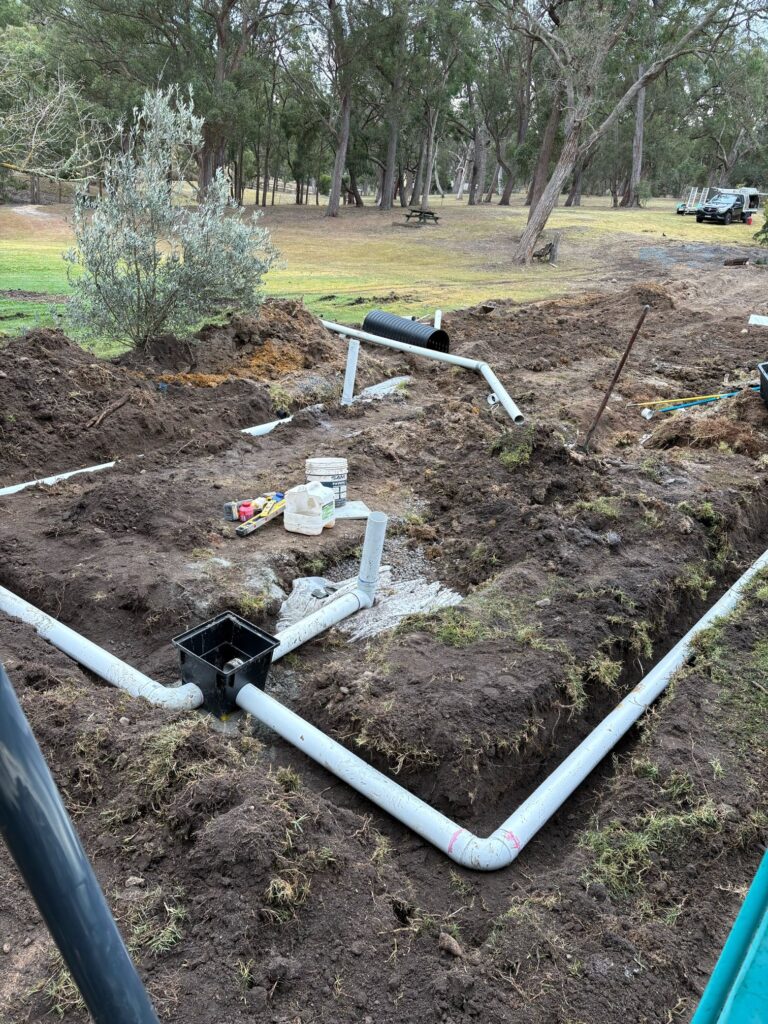
Before we provided Holly with a quote, we had a look at their existing setup. After we arrived on site, we:
- Traced the run of the old drain field
- Confirmed the wet patches lined up with the disposal lines, so it wasn’t a burst water pipe or surface runoff
- Worked out where a replacement field could go, and how it would be fed
The old field was done. Clearing or relining only helps when the pipe itself is the problem; here, the ground had stopped taking the load.
What We Did
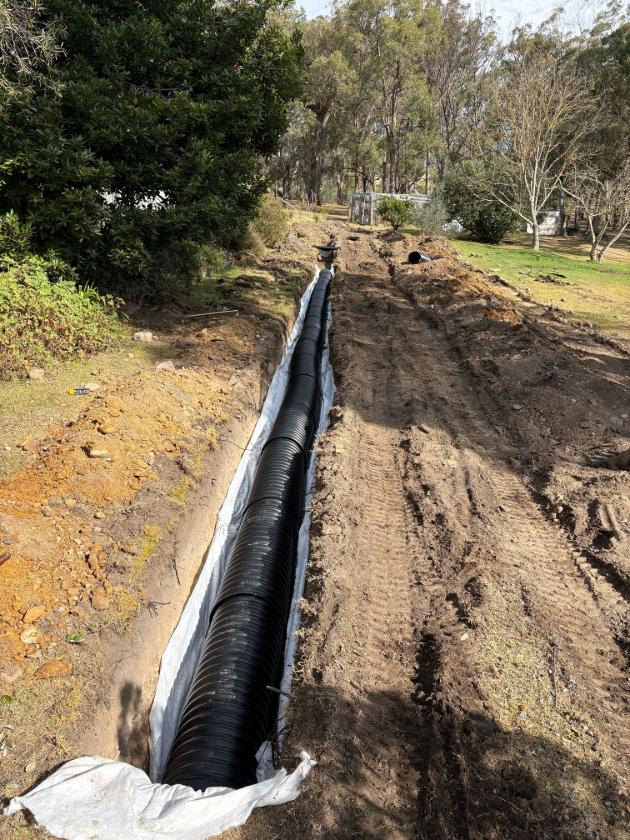
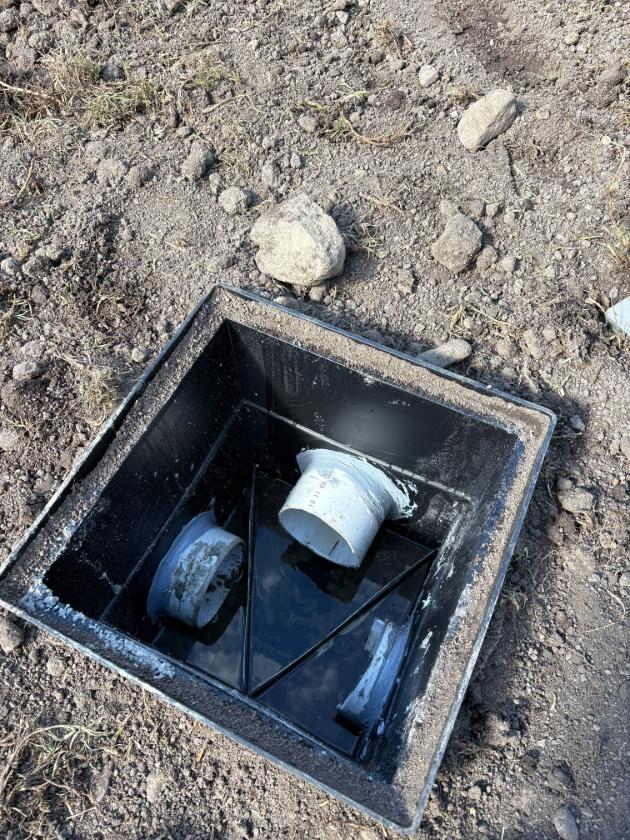
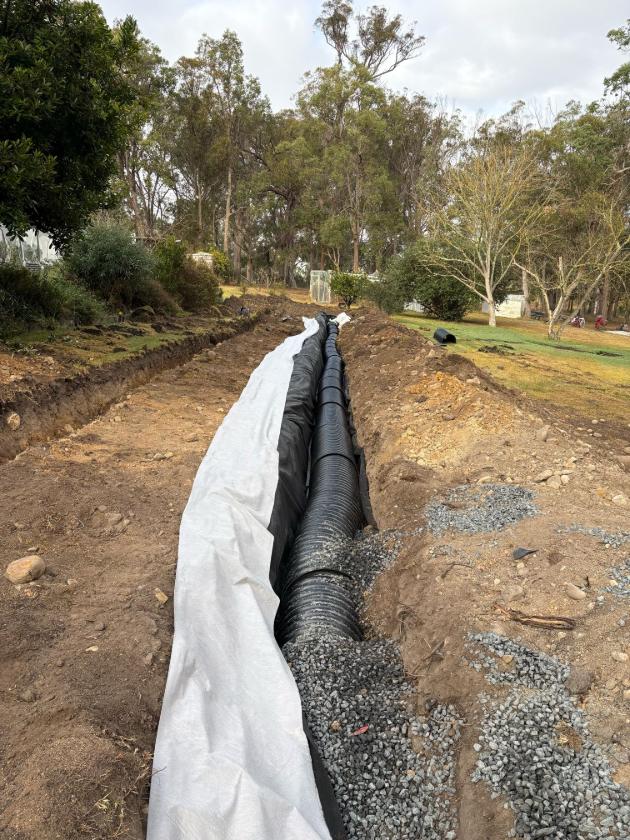
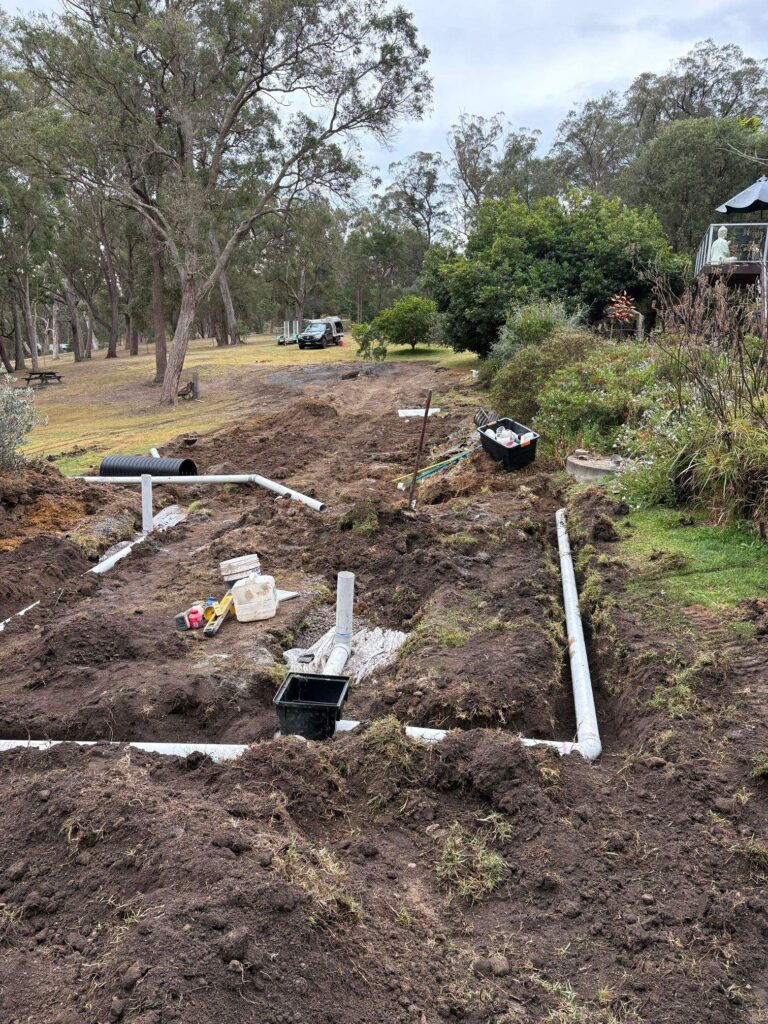
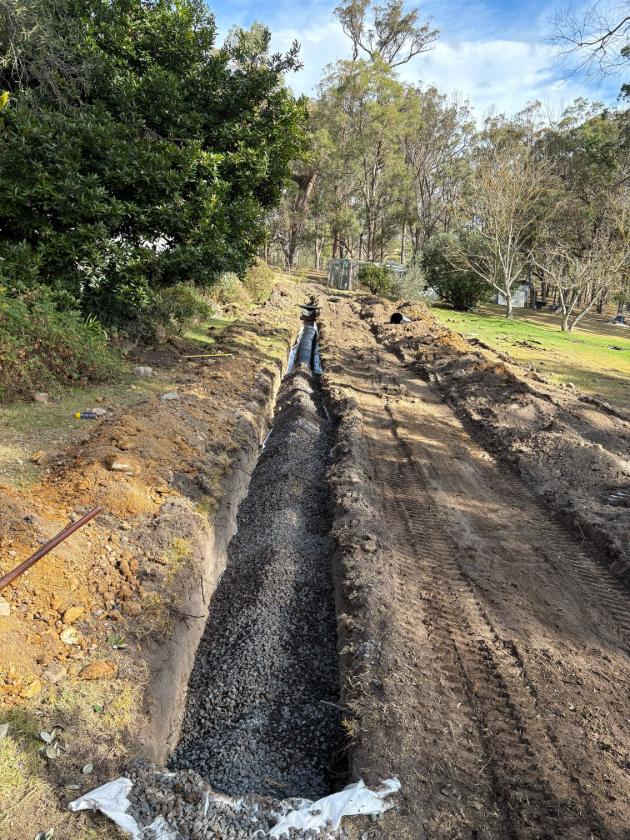
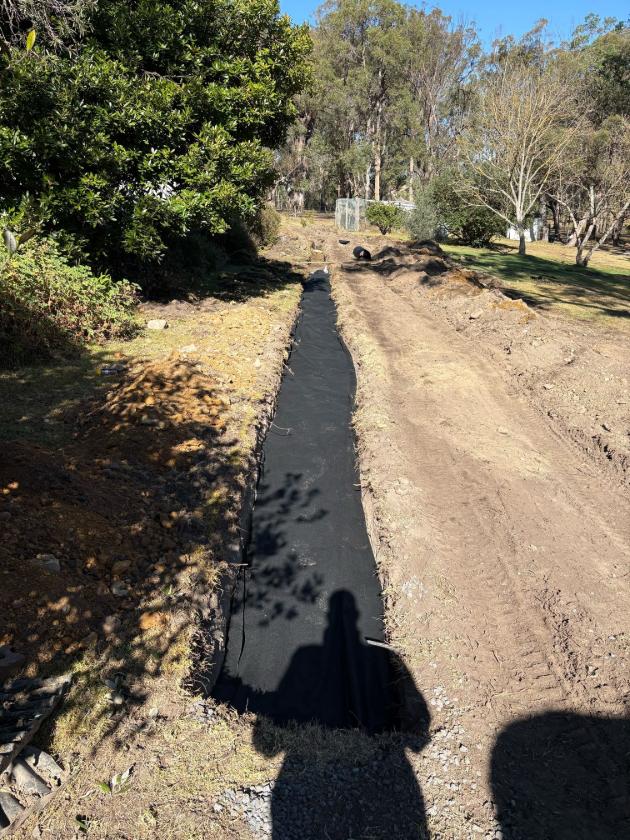
Once we had decided on the new location, we replaced the disposal side of the system. A new septic distribution box was installed, aligned with a new gravity soakage trench sized for the household, and the ground over the run was reinstated once it was done.
The field runs on fall. No pump, nothing to fail in a blackout.
The Same Visit, Inside the House
Kanoona is a fair drive, so we cleared the rest of Holly’s plumbing checklist while we were there. A new close-coupled toilet suite, a new sink mixer, a new cistern flushing valve, two pillar basin taps, a basin tap set Holly supplied herself, and two pairs of wall tap tops.
If you’ve got a bunch of small repairs and installations stacking up, it’s worth giving us a call and getting it done all at the same time, inside and out.
The Result
Holly’s septic system now has somewhere to drain again. The paddock has dried out, and the surfacing has stopped.
- Effluent now spreads evenly across the field instead of loading one part of it.
- The trench is built to resist the silting that shortens the life of a cheap one.
- The system can be inspected without excavation.
Is your Septic System Playing Up?
A system that’s backing up, smelling, or pushing effluent to the surface won’t fix itself. Book one of our local plumbers online or call 02 6430 7104. We handle septic tank work and subsoil drainage across Bega and the wider Bega Valley, and we’re licensed to do it.
Frequently Asked Questions
What are the signs a septic drain field has failed?
Typically, the signs can be the ground over the disposal lines staying wet and spongy in dry weather, sewage surfacing, and a smell outside near the field. Inside, you might see your drains go sluggish across the whole house at once, and the tank starts needing pumping more often.
I keep needing to pump my septic tank. Is the tank the problem or the field?
Usually, it’s the field. A tank that’s filling faster than normal is often a tank with nowhere to drain to, so it backs up and looks like it needs emptying. Pumping buys you a few weeks, then you’re back where you started. That pattern points to the problem being the field.
Can a failed drain field be repaired, or does the whole thing need replacing?
Depends what’s actually failed. If the pipe has collapsed or is blocked, and the ground around it is still absorbing, repairing that section works. If the soil itself has given up, the field has to be rebuilt in new ground, or the run needs to be relocated to a new field. For this project, that was the case.
Do I need council approval to replace a septic drain field?
Yes, and in the Bega Valley there are two: an approval to install and an approval to operate. Altering an existing system counts, not just putting in a new one, and council inspects once it’s approved. Bega Valley Shire Council’s onsite sewage management page covers both, and its Easy Septic Guide is worth a read if you’ve just bought a place on septic.
Can I drive over a new drain field?
No. Vehicles and machinery will compact the soil and crush the pipe, which is one of the most common ways a new trench needs repairing early on. Keep vehicles off the area, and plant grass rather than trees to prevent root intrusion.
What the Locals are Saying
Trustindex verifies that the original source of the review is Google. Keogh plumbing came with short notice and to fixed a blocked sewer pipe that had tree roots growing in them. We have used them before and would highly recommend them to anyone looking for a plumber within the Merimbula area. Thanks guysPosted on GoogleTrustindex verifies that the original source of the review is Google. Thanks Ryan, what a life saver. Our pump for our water tank stopped working and he was here so quickly, sorted a new pump and parts that needed replacing, he worked so quickly and efficiently and really lovely friendly service. Can't recommend these guys enough! Thanks again we really appreciate your excellent service.Posted on GoogleTrustindex verifies that the original source of the review is Google. My old plumber moved away and recommended Keogh plumbing. We found them to be very trustworthy hardworking reliable service with a great team! highly recommend to anyone!Posted on GoogleTrustindex verifies that the original source of the review is Google. Being new residents to the area and not having a tradie network to attend to an emergency Kristin and his team were absolutely fantastic rescheduled his work programme on a Friday afternoon and within a couple of hours emergency was all sorted our best tradie experience ever - simply the best Thank you Kristin & Team Kevin & ColleenPosted on GoogleTrustindex verifies that the original source of the review is Google. Steve came to my home this morning 27/11/24 on time as scheduled and in 1 hour had my problem sorted, something that two previous plumbers hadn't gone to the extent that he did. He was very communicative about any queries I had and explained everything clearly. I would highly recommend Keogh plumbing services for any plumbing problems you might have.Posted on GoogleTrustindex verifies that the original source of the review is Google. My wife and I could not have been happier with Kristin. We were in a bit of a tricky situation and had an unusual job (and relatively urgent) to get done, but Kristin worked with us, was extremely supportive and very understanding. He was very impressive, not only with his personal acumen, but his professional skills as well - greatly appreciated.Posted on GoogleTrustindex verifies that the original source of the review is Google. From the ease of booking, the outstanding communication, to the finished work, every aspect of our job was done professionally and promptly. The team were so proficient and genuinely first class tradesmen. We can't thank Kristen and his team enough. We would highly recommend.Posted on GoogleTrustindex verifies that the original source of the review is Google. Thank you to the team at Keogh Plumbing. I’ve had issues with leaking drains and taps for quite some time but now they are all in perfect working condition. Top notch work, can’t thank you guys enough!Posted on GoogleTrustindex verifies that the original source of the review is Google. Great team to work with, I had my hot water system break over night and the Keogh team was so quick to come out and get it all back in working order. HIGHLY recommend the Keogh Plumbing Team!Posted on Google